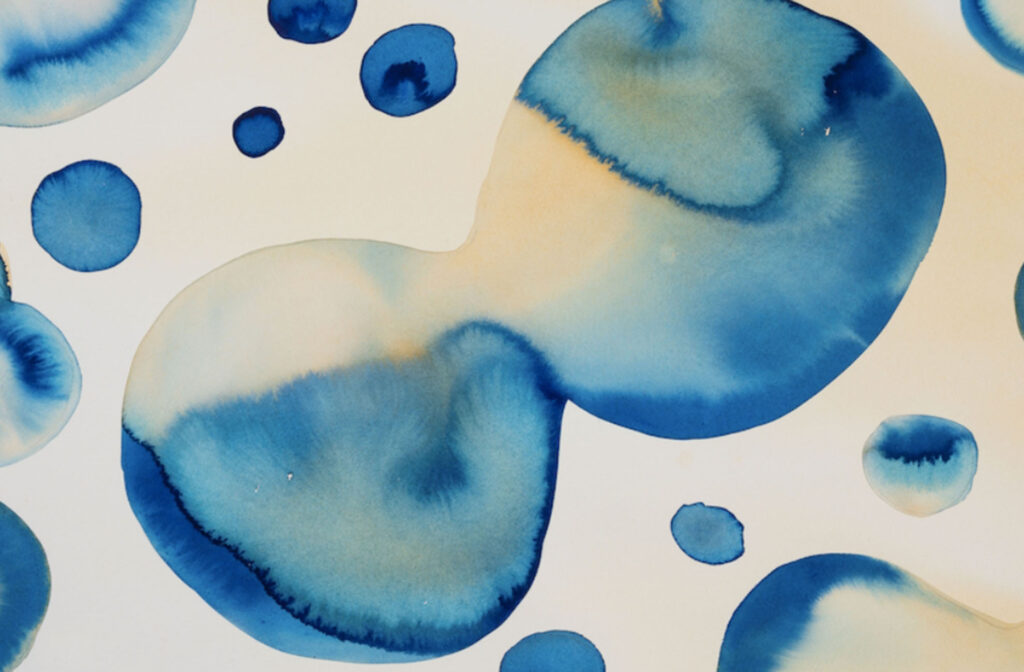
Biolamina: Laminin-521, crucial in vivo, regulates signaling and mediates adhesion in early development. Its recombinant form mimics these roles in vitro, ensuring stem cell stability for research and therapy.
Laminin-521 is the first extracellular matrix (ECM) protein expressed in the inner cell mass of the blastocyst, a decisive stage in embryonic development. Its early expression highlights its fundamental role in supporting embryonic stem cells and further development in vivo. Unlike alternative culture substrates like vitronectin or EHS extracts, which lack ties to the human pluripotent stem cell (PSC) niche, recombinant laminin-521 protein mirrors the natural ECM. It provides the biological environment required for pluripotency and self-renewal.
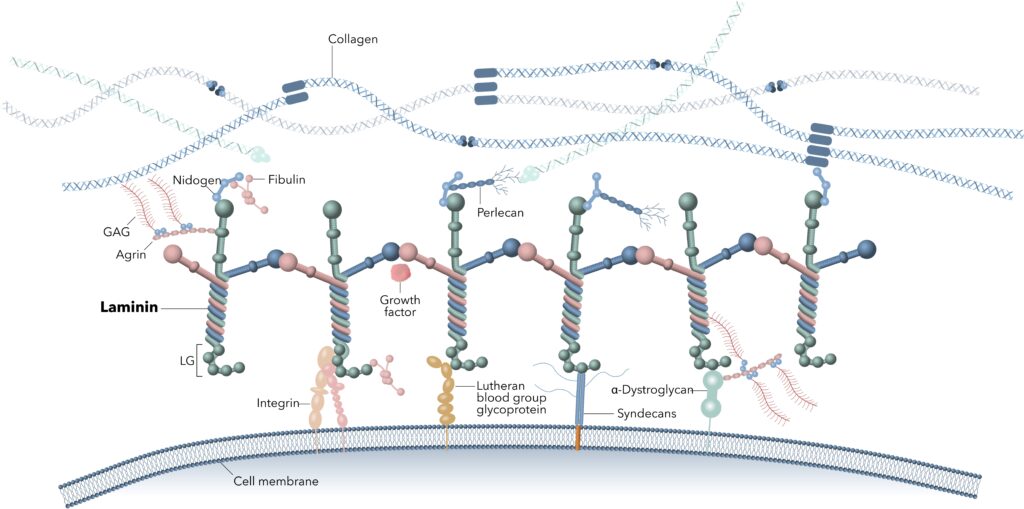
Laminins are large extracellular matrix proteins. Their full-length structure, preserved over time in evolution, is critical—shorter forms would not fulfill the functional requirements demanded by cells. Laminins use the entire protein structure to not only interact with various ECM factors and cell receptors but also to self-polymerize, forming stable networks crucial for their function. Even minor modifications to the amino acid sequence can result in severe diseases or lethality, further showing the necessity of its intact structure for full biological functionality.
Because of its foundational role in early development, full-length laminin-521 (Biolaminin® 521) provides essential support for stem cells in vitro. The benefits for cell culture are particularly evident in three key areas: survival, stability, and scalability.
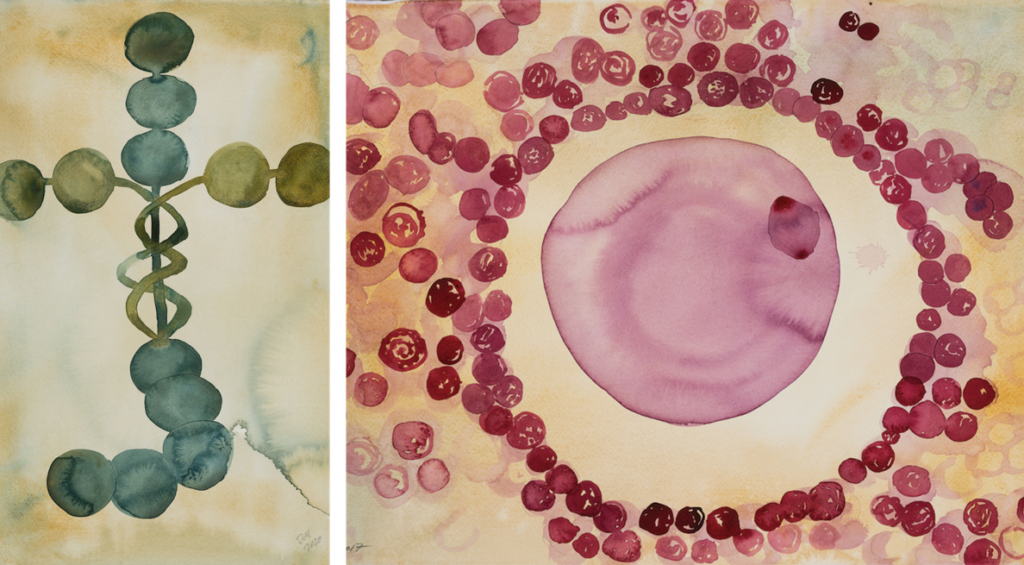
Laminin-521, like in the embryonic niche, provides the essential signals that enable PSCs to survive and thrive—even in challenging conditions such as single-cell culture and after cryopreservation.
Its role in bridging ECM signals with receptor activation enables cells to survive individually; in low densities or after single-cell sorting. For example, single PSC survival rate during cloning increased from 36% to 71% just by switching the substrate to Biolaminin (Namipashaki et al. 2023 Stem Cell Reports). Routine stem cell culture does not require ROCKi when using laminin-521, highlighting its biological relevance and practically reducing dependence on artificial reagents for cell survival and function.
In addition to improved survival, scientific data demonstrates superior cell proliferation rates compared to other substrates, yielding up to 10 times more stem cells in 10 days.
By mimicking the PSC niche, laminin-521 preserves cell identity, ensuring stable marker expression and morphology and preventing unwanted differentiation. It has also been shown to prevent DNA damage in high-density cultures, thereby increasing genomic stability.
In addition to stem cell culture, tissue-specific laminin isoforms are widely used in differentiation as they mimic various cell microenvironments. By improving cell maturity and consistent cellular responses, full-length laminin supports reliable differentiation outcomes across various applications.
Clinical-grade protocols aiming for generating dopaminergic neurons (Parkinson's disease), pancreatic islets (diabetes), and retinal pigment epithelial cells (age-related macular degeneration) consistently yield higher cell numbers and quality when full-length laminin matrices are utilized, exemplifying the impact they already have in the stem cell field.
For example, Biolaminin 221 and 521 together accelerate and enhance cardiomyocyte differentiation, enabling a reproducible protocol for heart failure treatment (Yap et al. 2019 Cell Reports, Yap et al. 2023, npj Regenerative Medicine).
Biolaminin also simplifies workflows by eliminating steps such as additional washing, removal of spontaneously differentiated cells, or handling on ice. The coating protocol is flexible, allowing for quick application or storage for long-term use. Laminin is also compatible with diverse materials—ranging from plastic to glass and hydrogels.
Full-length laminin works seamlessly with various cell lines, media, and culture conditions, reducing the need for extensive optimization. Its versatility makes it applicable from stem cells to mature cells and adaptable across research, clinical applications, and high-throughput devices. A single substrate to streamline the entire workflow.
BioLamina, the sole manufacturer of full-length human recombinant laminins, also provides scientific expertise and technical support, supporting success across research and clinical studies.
Focusing on clinical studies? Biolaminin MX and Biolaminin CT matrices support your cells from pre-clinical studies to commercial product.
In biotechnology, some proteins can function in truncated forms by leveraging an active site. However, this approach does not work for structural proteins like laminins. Instead of a single binding site, laminins rely on their full-length structure to interact with multiple receptors and extracellular matrix (ECM) components to provide essential signals for proper cell function.
As a fundamental protein for stem cells, laminin in its full form is critical for maintaining cell identity and function.
By using the complete protein, researchers ensure that the product provides comprehensive signaling, stabilizes the stem cell environment, and supports reliable survival, proliferation, and phenotype maintenance—all essential for reproducible stem cell culture outcomes.
Full-length laminin-521 stands out among extracellular matrix substrates as a defined, biologically relevant choice for stem cell culture and differentiation. Unlike other substrates, Biolaminin 521 uniquely mimics the PSC niche while providing a chemically defined, xeno-free, intact, and consistent formulation.
Biolaminin directly addresses key challenges in cell survival, identity, and stability. Its ability to replicate an authentic in vivo environment allows researchers to achieve reproducible results, generate credible conclusions, and ensure that the substrate supports rather than hinders high-quality outcomes.
Download BioLamina's App Note here to see all the benefits of full-length laminin substrate in PSC culture
BioLamina is a biotechnology company that specializes in matrix biology and cell culture research. The company provides Biolaminin® substrates, which are designed to support scientists in advancing stem cell research, cell therapies, and drug development. This facilitates progress from scientific discovery to clinical applications.
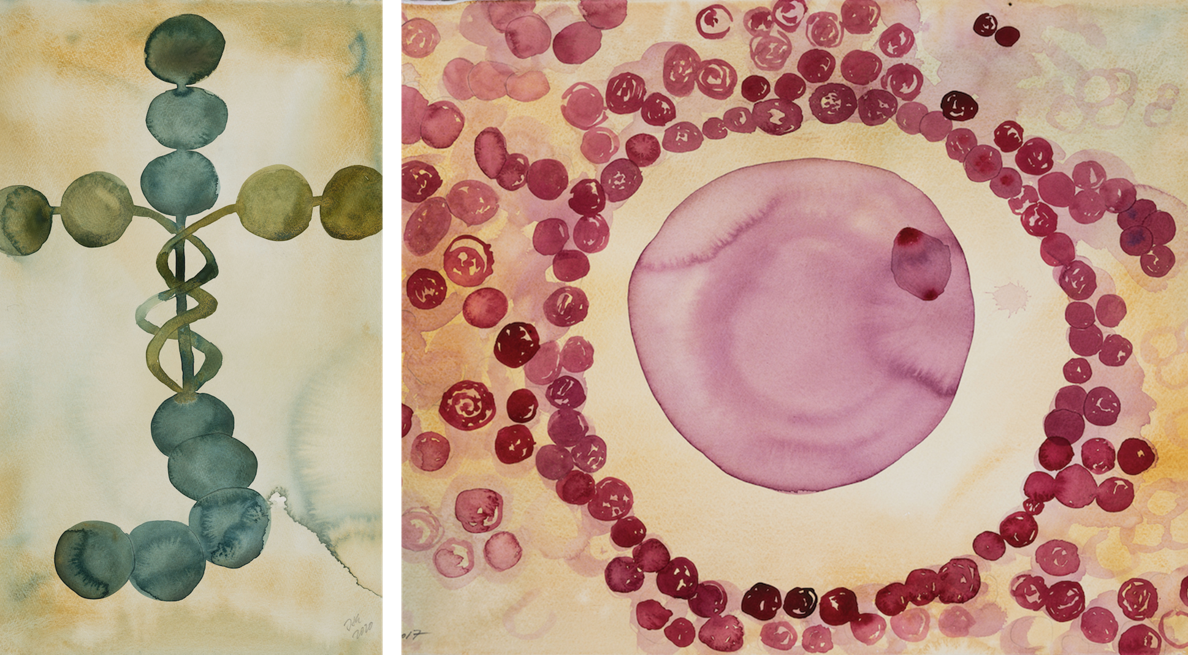


Cell Culture Matrices | ECM | Biolaminin | Biosilk | Cell Therapy Grade Biolaminin 521 | 3D cell culture
We gladly support you by keeping you updated on our latest products and developments